Setting a Daily Loss Limit You Will Actually Honor
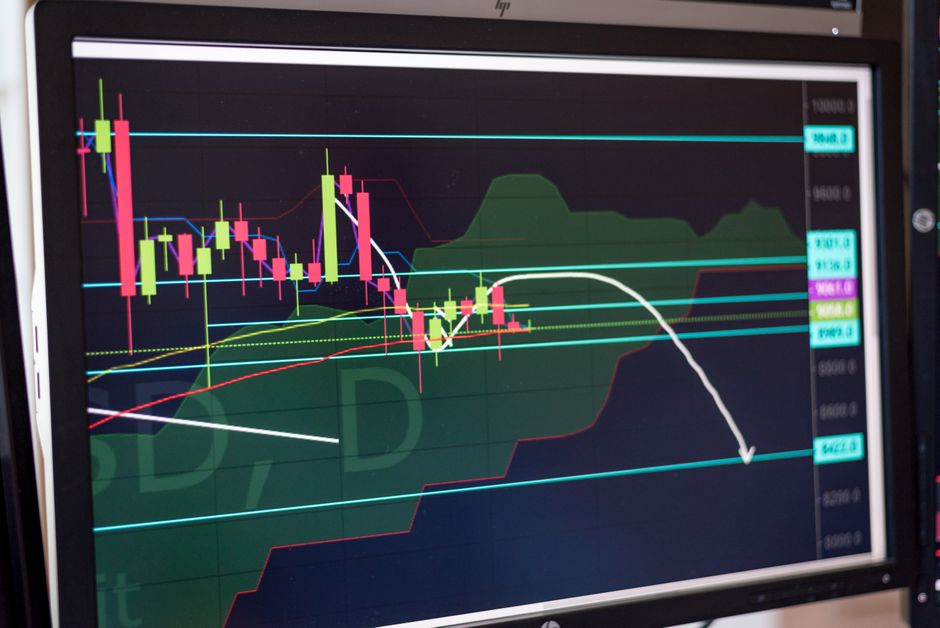
Almost every trader has a daily loss limit written down somewhere. Far fewer have one that has survived the session where it actually applied. The rule is trivial to author and difficult to keep, and the difficulty is not a character flaw. It is a predictable consequence of asking a person to make a costly decision at the exact moment they are least equipped to make it.
The Limit Only Exists at the Worst Moment

A limit that is never reached does nothing. Its entire function sits on the day you are already behind, already irritated, and already holding a private theory about why the next trade is the one that repairs the damage. That theory is not stupid. Sometimes the next trade would have worked. But the limit was not written to be right about the next trade. It was written because a session that has gone badly is a session in which your judgement is measurably worse, and the rule is the acknowledgement of that.
This is why arguing with the limit in the moment is not a fair fight. The version of you who set the number had no position, no loss and no urge to act. The version who has to obey it has all three.
Sizing It So It Is Neither Decoration Nor a Cage
There are two ways to get the number wrong. Set it too tight and ordinary variance will end your sessions constantly, which teaches you to ignore it, which is worse than having no limit at all. Set it too loose and it never binds until the damage is already substantial, at which point it is recording an outcome rather than preventing one.
The workable region is usually a small multiple of the money you put at risk on a single trade. That allows a normal losing sequence to run its course without the rule interfering, while still cutting off the sequence that has stopped being normal. The exact multiple matters less than choosing it deliberately and leaving it alone for a stretch of sessions long enough to see how often it triggers.
Decide What Counts Before You Need To Know
A surprising amount of limit failure is definitional rather than emotional. Does the limit measure realised loss only, or does an open position count against it while it is still running? Is it measured from the session start, or from the session's high water mark, so that giving back a good gain also counts? Do commissions and fees come out of the limit or sit outside it?
Each of these defines a different rule with a different character, and none of them is wrong. What is wrong is leaving the question open, because ambiguity in a rule is always resolved in favour of continuing to trade. If the definition is decided in advance, the limit either binds or it does not, and there is nothing to interpret.
Enforcement Belongs Outside Your Own Head
Willpower is the least reliable enforcement mechanism available, and it is at its lowest precisely when the limit applies. Anything that moves enforcement out into the environment is an improvement. Many platforms and brokers allow a hard daily loss control that locks the account. Failing that, the physical act of shutting the software and leaving the desk creates enough friction to matter, because restarting requires a deliberate decision rather than a reflex.
The point is not that you cannot be trusted. It is that a rule which requires an act of self control every time it binds will eventually meet a session where that act is not available, and one such session is enough.
What Happens the Next Morning
A limit says nothing about tomorrow, and the most common error after hitting one is to return with larger size to recover what was lost. That converts a bounded bad day into an unbounded bad week. The recovery, if there is one, comes from the same sizing policy that was in force before, applied over enough sessions for the strategy to express itself.
It is also worth writing down what happened while it is fresh. Not the outcome, which you already know, but whether the trades that produced the loss followed the plan. A limit reached through three rule-following losses is a normal cost of doing business. A limit reached through one rule-following loss and two attempts to fix it is a different problem, and the limit did its job by stopping the third attempt from becoming a fourth.