ORB Trading Risk Management
Notes on deciding the money at stake before an opening range session begins: daily loss ceilings, risk taken as a fixed fraction of the account, and what a risk budget has to absorb when the range comes in unusually tall.
The Money Is Decided Before the Chart Is
Every discussion of the opening range breakout eventually arrives at entries, and almost none of them start with the amount of money that can be lost. That order is backwards. The size of the position, the daily ceiling and the fraction of the account exposed to a single idea are all decisions that can be made calmly, in advance, with no price on the screen. The entry has to be judged in real time. The risk does not, and anything that can be settled early should be.
A Loss Limit Is a Structure, Not a Wish
Writing down a daily maximum takes a minute. Honouring it on the session where it binds is a different task entirely, because the moment it applies is the moment it feels most unreasonable. A limit that lives only in your head is a preference. A limit set at the platform, at the broker, or enforced by simply closing the software is a constraint. The distinction matters because the version of you who set the number and the version who has to obey it are not in the same state of mind.
Risk as a Fraction of What You Have
Risking a fixed fraction of the account on each trade means the money at stake shrinks after losses and grows after gains, without any judgement being applied. It removes the most common way accounts are damaged, which is not a run of bad trades but one oversized trade taken during a run of bad trades. The fraction is a policy. The number of contracts or shares is the output of that policy, not an input, and it changes from session to session because the stop distance changes.
The Range Height Sets the Price of Entry
An opening range that is unusually tall is expensive in a very specific sense. If the stop sits at the far edge, the distance from entry to stop is larger, so the same fraction of the account buys a smaller position. That is the arithmetic working correctly rather than a problem to be solved. The problem appears when a trader keeps size constant and lets the money at risk expand instead, which turns an ordinary session into an unusually large bet without anybody deciding to make one.
Where the Risk Notes Begin
The articles here stay on the money side of the opening range breakout. They deal with daily loss limits, fixed fractional sizing when the stop distance keeps moving, and what a risk budget has to absorb on a session where the range is far wider than normal. Entries, targets and range reading are left alone. The question throughout is how much is at stake and how that figure was arrived at, rather than where the order goes.
Latest Guides
Fixed Fractional Risk When the Range Keeps Changing Size
The opening range is a different height every session. If the stop sits at the far edge of that range, then the distance between entry and stop is a moving number, and any sizing habit that ignores it produces a different bet every day without the trader choosing to vary the bet. Fixed fractional risk exists to close that gap.
What the Method Actually Fixes
The idea is simple to state. You decide what fraction of the account may be lost on a single trade, and that fraction stays constant. Everything else adjusts around it. Because the fraction is expressed in money and the stop is expressed in price, the position size becomes the variable that reconciles them.
What this fixes is not the win rate and not the quality of the setup. It fixes the consistency of the bet. Two sessions that both follow the rules should cost about the same when they lose, and without a sizing policy they rarely do. A tight range with constant size is a small loss and a wide range with the same size is a large one, so the strategy's results end up being driven by range height rather than by whether the trades worked.
Stop Distance Is the Input, Size Is the Output
The order of operations matters more than it sounds. Many traders start with a position size they are comfortable with, place the stop, and accept whatever loss that combination implies. That is the reverse of the method. The correct sequence is to measure the range, establish where the stop belongs on the basis of structure, convert that distance into money per unit, and then divide the permitted risk by that figure to get the size.
Done in that order, a tall range automatically produces a smaller position and a compressed range automatically produces a larger one. Nobody has to remember to trade smaller on a volatile day. The arithmetic already did it, which is the entire point of writing the rule as a fraction rather than as a number of contracts or shares.
Rounding, Minimum Size and the Trades You Cannot Take
The clean version of the arithmetic assumes you can hold any quantity. In practice size comes in whole units, and on a small account with a wide range the calculation sometimes returns less than one unit. This is not a flaw to be worked around. It is the method telling you that the trade cannot be taken at your permitted risk, and rounding up to the minimum means overriding the rule in exactly the situation the rule was designed for.
Rounding down is the honest response, and when rounding down reaches zero, the honest response is no trade. Traders who instead take the minimum size on every wide range end up with their largest relative bets on their most volatile sessions, which is precisely the distribution they were trying to avoid.
The Fraction Moves With the Account, Which Cuts Both Ways
Because the risk is a fraction rather than a fixed sum, the money at stake falls after a losing stretch and rises after a winning one. On the downside this is protective. Each successive loss is smaller in absolute terms, so a drawdown decays rather than compounding at a constant rate, and a run of bad sessions cannot mechanically empty the account.
The mirror image is that recovering from a drawdown requires a larger percentage gain than the percentage lost, and the smaller size makes that recovery slower. That is a real cost, and it is the price of the protection. The mistake is to notice the slow recovery and respond by lifting the fraction, which removes the protection at the moment it is doing the most work.
Where the Method Strains
Fixed fractional sizing assumes the stop is honoured at roughly the price you chose. On an instrument that can move through a level without trading at it, the realised loss can exceed the planned one, and the fraction becomes an estimate rather than a guarantee. Sessions around scheduled releases are the obvious case. Nothing about the sizing rule prevents this, so it has to be handled separately, usually by not being in the trade.
The method also says nothing about how many trades a session may contain. A fraction per trade combined with an unlimited number of trades is not a risk policy. The per trade fraction and a session level ceiling are two different rules doing two different jobs, and holding one without the other leaves the more damaging failure mode wide open.
Setting a Daily Loss Limit You Will Actually Honor
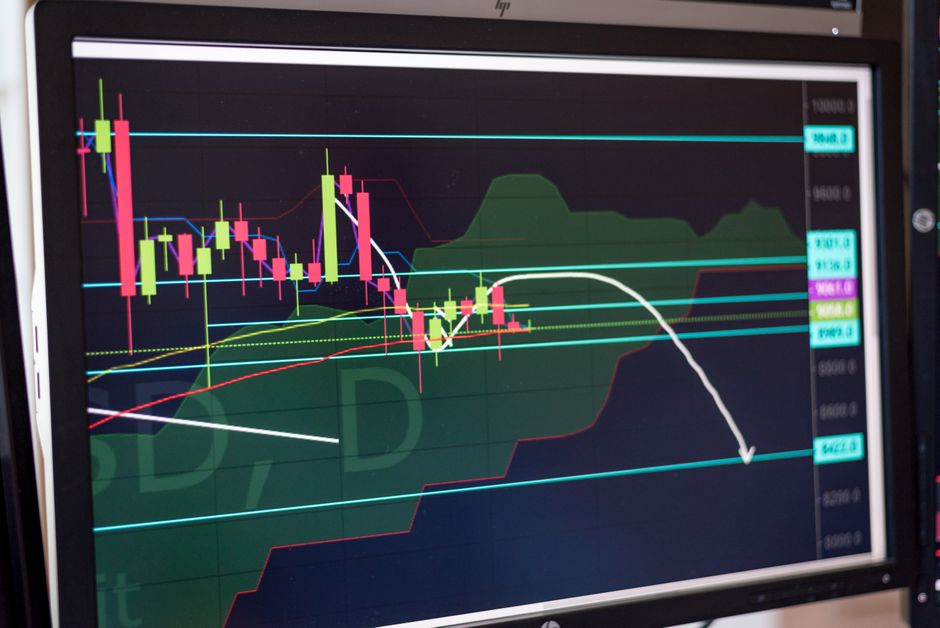
Almost every trader has a daily loss limit written down somewhere. Far fewer have one that has survived the session where it actually applied. The rule is trivial to author and difficult to keep, and the difficulty is not a character flaw. It is a predictable consequence of asking a person to make a costly decision at the exact moment they are least equipped to make it.
The Limit Only Exists at the Worst Moment
A limit that is never reached does nothing. Its entire function sits on the day you are already behind, already irritated, and already holding a private theory about why the next trade is the one that repairs the damage. That theory is not stupid. Sometimes the next trade would have worked. But the limit was not written to be right about the next trade. It was written because a session that has gone badly is a session in which your judgement is measurably worse, and the rule is the acknowledgement of that.
This is why arguing with the limit in the moment is not a fair fight. The version of you who set the number had no position, no loss and no urge to act. The version who has to obey it has all three.
Sizing It So It Is Neither Decoration Nor a Cage
There are two ways to get the number wrong. Set it too tight and ordinary variance will end your sessions constantly, which teaches you to ignore it, which is worse than having no limit at all. Set it too loose and it never binds until the damage is already substantial, at which point it is recording an outcome rather than preventing one.
The workable region is usually a small multiple of the money you put at risk on a single trade. That allows a normal losing sequence to run its course without the rule interfering, while still cutting off the sequence that has stopped being normal. The exact multiple matters less than choosing it deliberately and leaving it alone for a stretch of sessions long enough to see how often it triggers.
Decide What Counts Before You Need To Know
A surprising amount of limit failure is definitional rather than emotional. Does the limit measure realised loss only, or does an open position count against it while it is still running? Is it measured from the session start, or from the session's high water mark, so that giving back a good gain also counts? Do commissions and fees come out of the limit or sit outside it?
Each of these defines a different rule with a different character, and none of them is wrong. What is wrong is leaving the question open, because ambiguity in a rule is always resolved in favour of continuing to trade. If the definition is decided in advance, the limit either binds or it does not, and there is nothing to interpret.
Enforcement Belongs Outside Your Own Head
Willpower is the least reliable enforcement mechanism available, and it is at its lowest precisely when the limit applies. Anything that moves enforcement out into the environment is an improvement. Many platforms and brokers allow a hard daily loss control that locks the account. Failing that, the physical act of shutting the software and leaving the desk creates enough friction to matter, because restarting requires a deliberate decision rather than a reflex.
The point is not that you cannot be trusted. It is that a rule which requires an act of self control every time it binds will eventually meet a session where that act is not available, and one such session is enough.
What Happens the Next Morning
A limit says nothing about tomorrow, and the most common error after hitting one is to return with larger size to recover what was lost. That converts a bounded bad day into an unbounded bad week. The recovery, if there is one, comes from the same sizing policy that was in force before, applied over enough sessions for the strategy to express itself.
It is also worth writing down what happened while it is fresh. Not the outcome, which you already know, but whether the trades that produced the loss followed the plan. A limit reached through three rule-following losses is a normal cost of doing business. A limit reached through one rule-following loss and two attempts to fix it is a different problem, and the limit did its job by stopping the third attempt from becoming a fourth.
The Risk Budget Question a Wide Range Forces
Think of the session as having a fixed amount of money available to lose. Not a target, not an expectation, just a quantity that has been set aside and that will not be topped up before the close. Once risk is framed that way, an unusually tall opening range stops being a question about whether the setup looks good and becomes a question about what fraction of the allowance a single trade is about to consume.
A Budget Is Finite by Definition
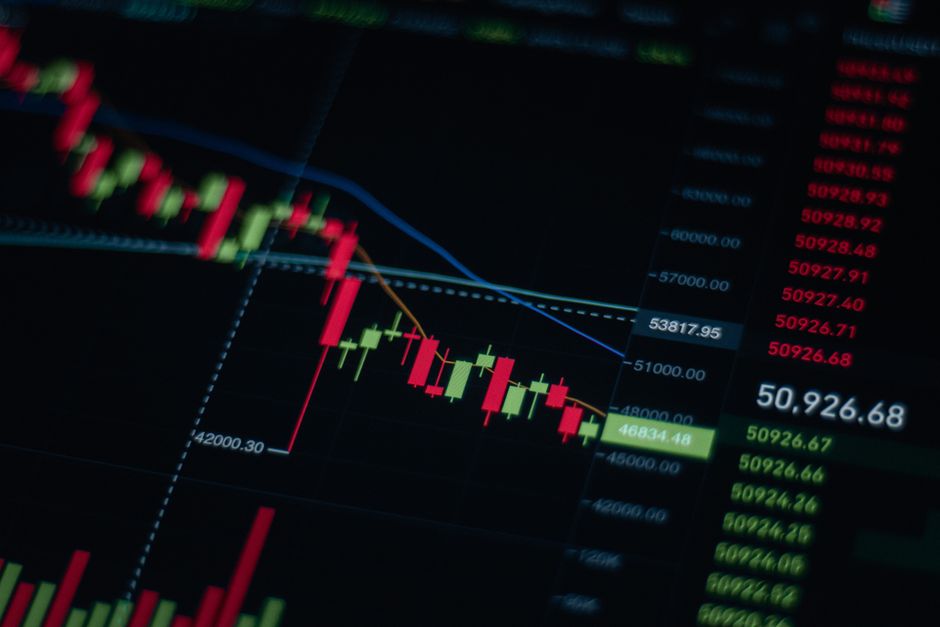
The word budget is doing real work here. A daily loss limit is a wall you hit. A budget is something you spend down, deliberately, across the trades you choose to take. The difference is that a wall is passive and a budget forces an allocation decision at the start of every trade rather than at the end of a bad run.
If the allowance covers a handful of ordinary losses, then an ordinary trade costs a modest share of it and there is room for the session to go wrong more than once. That room is not slack. It is what allows a strategy with a normal loss rate to keep operating on a bad morning instead of being shut down by the first two attempts.
The Wide Range Charges More for the Same Trade
When the stop belongs at the far edge of the range and the range is far taller than usual, the loss on that single trade is larger in money terms unless size is reduced. Held at the same size, one trade on a wide range session can consume most of what would normally fund several attempts.
Nothing about the setup changed to justify that. The rules are the same rules, the pattern is the same pattern, and the only thing that moved was the height of the range. Yet the session has quietly become a one shot affair, and if that first attempt fails there is nothing left to work with. Traders rarely decide to do this. They simply keep size constant and let the budget absorb the difference.
One Large Attempt or Several Smaller Ones
Framed as a budget, the wide range presents a genuine choice rather than an obvious answer. You can spend the whole allowance on one full sized attempt, accepting that the session ends either way on that trade. You can reduce size so the wide stop costs a normal share, keeping the ability to try again. Or you can decline to spend anything, which is also an allocation.
Each has a defensible case. The single large attempt makes sense if you genuinely believe the wide range is signalling the kind of session where the move continues, and if you accept the concentration. The reduced size version keeps the day alive at the cost of a smaller reward if the move works. What is not defensible is arriving at the first option by accident because size never changed.
Reduced Size Does Not Solve Everything
Cutting size on a wide range holds the money at risk roughly constant, which is the correct response to the widened stop. It does nothing about the other half of the problem, which is that the instrument has already covered a meaningful part of its likely daily travel while forming the range, so the distance available beyond the break is compressed.
So the reward side shrank while the risk side was being held steady. The trade is not the same trade at a smaller scale. It is a worse trade at a smaller scale, and the budget framing makes that visible in a way that thinking only about the stop does not. Whether it is still worth taking depends on how much the ratio deteriorated, which is a question you can only answer if you know what the ratio normally looks like.
Set the Allowance Before the Range Forms
All of this is easy to reason about with no position and hard to reason about with the range on the screen and the first candle pushing through the edge. The allowance, the normal share a trade may consume and the point at which a range is considered wide enough to change the calculation all belong in a note written before the session opens.
Written in advance, the wide range becomes an arithmetic problem with a known answer. Decided in the moment, it becomes a negotiation, and the outcome of that negotiation is almost always a full sized position on the day that could least afford one.